Tanning is the skin’s response to UV exposure, and it often appears after time spent outdoors without enough protection. Dermatology sources note that the same sunlight that causes tanning can also contribute to sun damage, so the goal is not just cosmetic fading but prevention as well.medicalnewstoday+2
Start with prevention
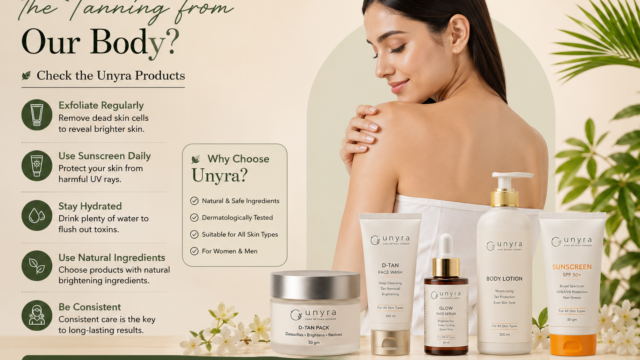
The most effective step is daily sun protection. Broad-spectrum sunscreen with at least SPF 30, reapplied regularly, helps limit new tanning, while hats, sunglasses, long sleeves, and shaded routines reduce direct exposure.medicalnewstoday+2
Keep skin cool and protected
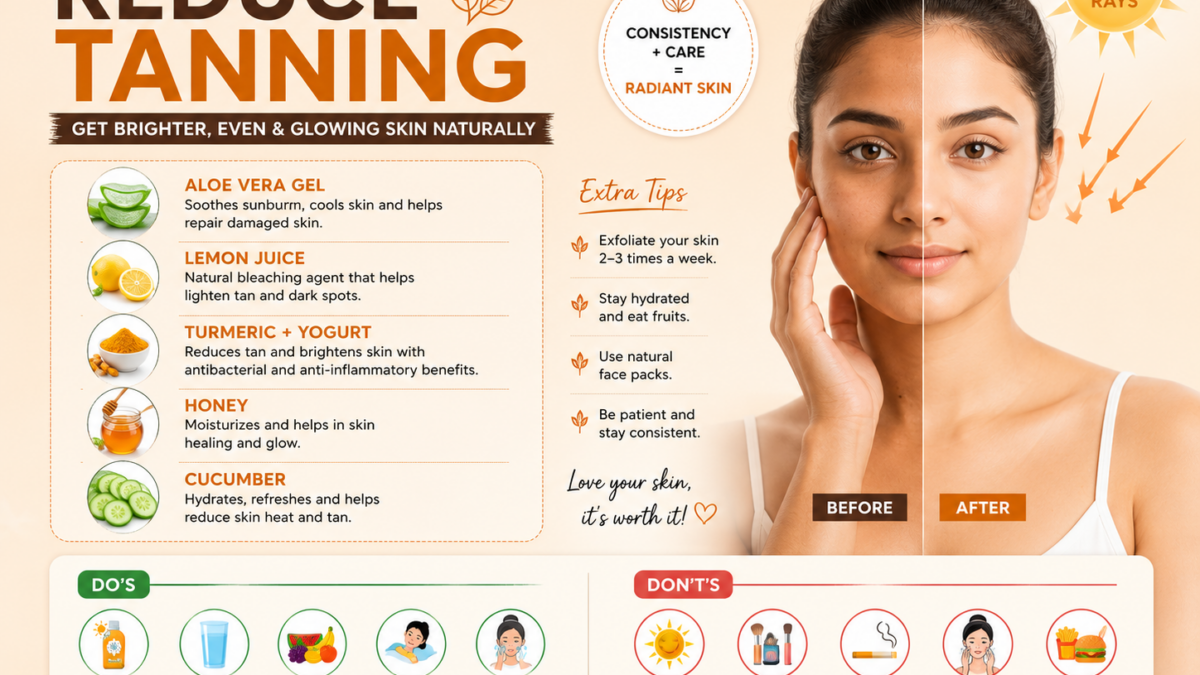
After sun exposure, soothing ingredients like aloe vera can help calm the skin, and gentle moisturising supports recovery. Health and skincare sources also suggest avoiding peak sun hours, especially between late morning and afternoon, when UV strength is highest.hindustantimes+2
Home care that may help
Some natural ingredients are commonly used to brighten the appearance of tanned skin, including yogurt, tomato, cucumber, papaya, and besan-based packs. These remedies are described in lifestyle and medical articles as mild supportive care, not instant fixes, and they should be used carefully on sensitive skin.medicalnewstoday+2
What to avoid
Harsh scrubbing, strong lemon applications, and over-exfoliation can irritate the skin instead of improving it. Medical guidance emphasizes sun protection and gentle care over aggressive DIY methods, especially if the skin is already irritated or sunburned.medicalnewstoday+1
When to seek help
If tanning is uneven, persistent, or accompanied by burning, peeling, or dark patches, a dermatologist can help identify whether the issue is simple tanning or something more complex. Persistent sun damage can take longer to fade and may need professional advice.